What EMI Gaskets Meet 5G mmWave Requirements? Materials and Designs for High-Frequency EMI Shielding
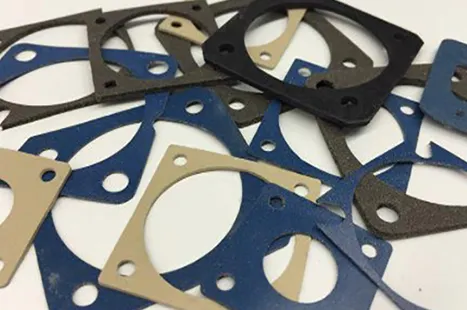
At millimeter-wave frequencies, even a hairline seam is large enough to behave like a slot antenna; this counterintuitive fact makes EMI sealing an engineering challenge that many designers underestimate. When wavelengths shrink to a few millimeters, common enclosure gaps become radiators and conventional gaskets suddenly fall short. Engineers facing this new reality need to rethink how they seal high-frequency electronics and recognize that EMI shielding is as much about seam geometry as it is about material choice.
In practice, only a handful of solutions meet these demanding requirements. Highly conductive elastomers and oriented-wire composites provide the necessary attenuation above 10 GHz. Success depends as much on joint preparation and profile selection as on the compound itself.
The question of which EMI gaskets meet 5G mmWave requirements has a clear answer: choose materials with proven 90–110 dB performance at 10 GHz, ensure clean metal-to-metal contact, and match the gasket’s profile to the mechanical constraints of the enclosure. Hence, it functions as a reliable RF shield.
Why mmWave Devices Need Robust EMI Gaskets
Millimeter-wave electronics operate at frequencies where wavelengths shrink to a few millimeters. At these scales, the slots formed by poor joints behave as slot antennas, coupling energy out of the enclosure or into sensitive circuits.
The NASA Marshall Space Flight Center’s electromagnetic compatibility handbook warns that adequate contact pressure is essential so that a gasket makes good metal-to-metal contact even if a non-conductive film is present. It also stresses the importance of clean mating surfaces and sufficient clamping force, noting that failure to meet these basic conditions can degrade shielding irrespective of the material used.
As frequencies rise above 10 GHz, the skin depth in conductive materials decreases, and the resistivity of the gasket compound becomes more important. The Defense Logistics Agency’s Qualified Products List (QPL) lists materials capable of providing around 110 dB plane-wave attenuation at 10 GHz. Such performance levels are necessary when designing densely packed 5G radios or phased-array antennas where adjacent modules sit millimeters apart. Designers must therefore select materials and profiles that maintain low impedance across the seal and avoid resonances in the seam.
Choosing Materials for 5G mmWave EMI Gaskets
Conductive elastomers: silver- and nickel-filled silicones
Electrically conductive elastomers have been the workhorse of EMI gasketing for decades because they combine environmental sealing with electrical continuity. Within the MIL-DTL-83528 specification, Type C materials are fluorosilicones filled with silver-plated copper particles. The Defense Logistics Agency notes that such gaskets deliver approximately 110 dB plane-wave attenuation at 10 GHz and can operate from −55°C to +125°C. These elastomers maintain conductivity under compression, resist solvents and jet fuels, and are offered in sheet or extrusion form. In mmWave systems, high filler loading ensures low resistance across the gasket, minimizing skin-depth losses at high frequencies.
Nickel-graphite- and nickel-aluminum-filled silicones offer a lower-cost alternative with moderate conductivity. While they may not reach 110 dB at 10 GHz, they still provide substantial attenuation and are appropriate for less demanding applications or when galvanic corrosion must be minimized. Regardless of filler choice, engineers should verify published shielding data at relevant frequencies rather than assuming low-frequency performance extends into the mmWave band.
Oriented-wire and fabric-over-foam gaskets
Oriented-wire gaskets embed numerous fine metal wires - often Monel or aluminium - within a silicone matrix. Each wire bridges the mating surfaces, creating a dense array of conductive paths. Because the wires pierce through oxides and coatings, oriented-wire gaskets maintain contact even under modest compression. The NASA handbook lists them among the most resilient conductive gaskets and notes their ability to combine fluid sealing with conductivity.
For mmWave enclosures where even a sub-millimetre gap can radiate, the multiple contact points provided by oriented-wire and fabric-over-foam gaskets help prevent slot resonances. Fabric-over-foam gaskets use a conductive fabric wrapped around a compliant foam core.
They are particularly useful for doors and lids where compression force is limited, and the mating surface cannot tolerate abrasion.
Absorptive and hybrid materials
Beyond conductive gaskets, designers may also incorporate microwave absorbers to damp resonances inside the enclosure. Polymer composites filled with carbon nanotubes or conductive carbon black can provide both shielding and absorption. Recent studies on thermoplastic elastomer blends demonstrate that selectively distributed conductive fillers yield composites with significant EMI attenuation while remaining flexible. Although these materials are more commonly used for internal components or housings, their development illustrates the broader trend toward lighter, multifunctional shielding solutions that may influence future gasket technologies.
Design Considerations: Profiles, Compression, and Joint Preparation
Profile geometry and contact pressure
Selecting the right gasket profile ensures that the seal maintains uniform contact without excessive force. For flanged enclosures, rectangular-section gaskets provide a large contact area but require greater compression. O-rings and D-shaped profiles concentrate the load, making them suitable for thin flanges or uneven surfaces. Regardless of profile, the NASA handbook cautions that sufficient contact pressure must be applied so that the gasket breaks through non-conductive films and makes metal-to-metal contact.
Compression stops, or limiters, may be required to prevent over-compression, which can set the gasket and reduce elasticity.
Joint preparation is equally critical. Surfaces should be free of paint, anodization, and lubricants; a light abrasive may be used to expose bare metal. For aluminium housings, a conductive conversion coating can provide corrosion resistance without sacrificing conductivity. If the mating surface cannot be cleaned (for example, when using plated plastics), designers should consider gaskets with integrated wire contacts or choose adhesives that create a conductive bridge.
Testing and standards for mmWave gaskets
The primary test for EMI gaskets is shielding effectiveness, measured as the reduction in electromagnetic field strength across the gasketed seam. Standard fixtures derived from MIL-DTL-83528 evaluate plane-wave attenuation from 20 MHz to 10 GHz. Materials qualified under this standard have demonstrated performance of 90 – 110 dB across the band. Design teams should request frequency-specific data and not rely on extrapolation from low-frequency values. In addition, mechanical tests such as hardness (Shore A durometer), tensile strength, elongation, and compression set assure that the gasket will maintain contact under thermal cycling and vibration.
Selecting the Right mmWave EMI Gasket for Your Application
When choosing a gasket for a 5G enclosure, engineers must balance electrical performance, mechanical design, and environmental factors. In effect, the gasket serves as an RF shield, preventing high-frequency leakage and ensuring electromagnetic compatibility. Start by determining the required attenuation – telecom modules may require 60–80 dB, while radio front-ends and phased arrays should target 100 dB or more. Next, evaluate the available space and flange geometry. If clearance is tight or the surface is irregular, oriented-wire or fabric-over-foam gaskets provide reliable contact with minimal compression. Where environmental sealing and high shielding must coexist, a conductive fluorosilicone elastomer with a rectangular profile can provide both fluid resistance and EMI suppression.
For prototypes or low-volume runs, consider form-in-place technologies that use a robot to dispense conductive silicone directly onto the enclosure. This approach allows custom shapes without tooling, though it requires controlled processing. Finally, ensure that the selected gasket material is compatible with the housing materials to avoid galvanic corrosion, and verify that it meets relevant standards such as MIL-DTL-83528 or IEC 61000-5-7.


Comments
Post a Comment